Department of Mechanical Engineering
The department offers both UG and PG programmes.
The institution has constituted an in-house Technical Association that operates under the name of ‘Association of Mechanical Engineers of AVIT’. This department has collaborated with multiple professional bodies such as the ENFUSE, SAE Collegiate Club and NIQR.
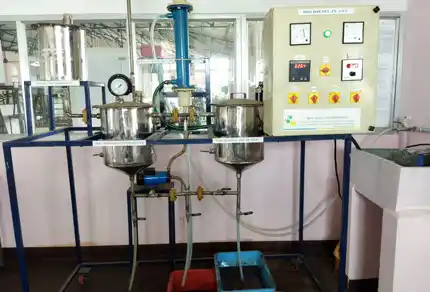
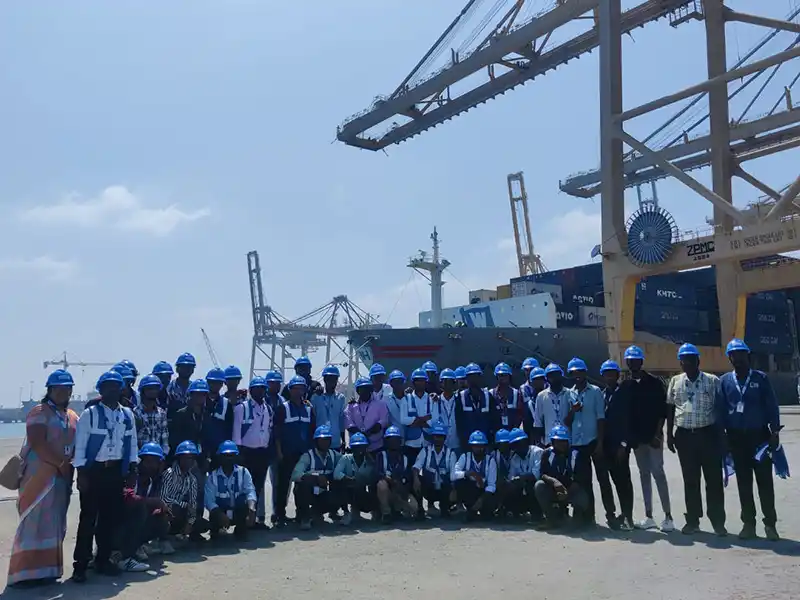
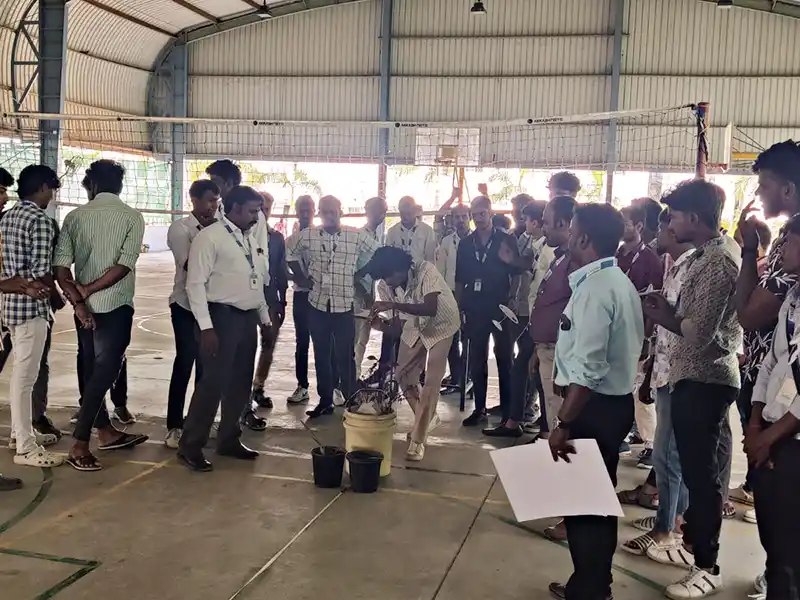
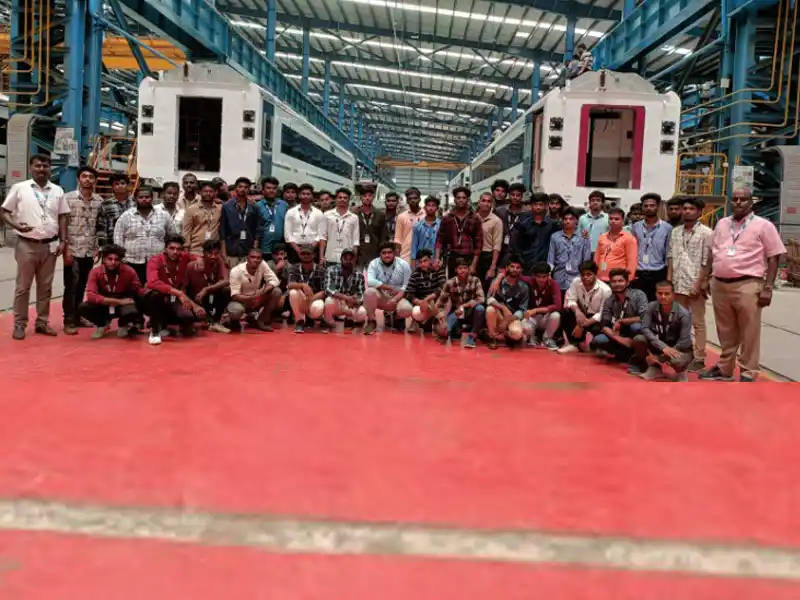
The department organizes seminars, guest lectures, workshops, faculty development programs, symposia, conferences, industrial visits, in-plant training, and inter-collegiate programmes, with the goal of advancing the expertise and educational progress of faculty and students alike.
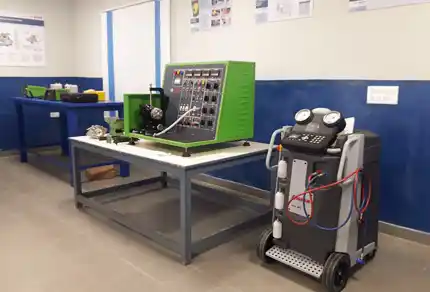
The department also engages in research and consultancy projects through its Centres of Excellence, which include the Alternative Fuel Testing Centre and the Research Centre for BOSCH Automotive Research.
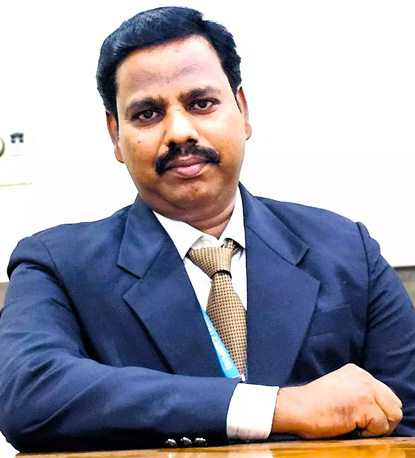
Dr. M. Prabhahar
Professor and Head
Welcome to the Department of Mechanical Engineering, it gives me immense pleasure to extend a warm welcome to all of you as you embark on your academic journey with us. As the Head of this esteemed department, I am proud to share that our department is home to state-of-the-art research laboratories and industry-sponsored labs, providing you with unparalleled opportunities to enhance your knowledge and skills. The knowledge and skills you acquire here will serve as the foundation for your future success, both as engineers and as innovators. I look forward to witnessing your achievements and contributions to the field of mechanical engineering.
• The Department of Mechanical Engineering endeavors to be the globally recognized knowledge epicenter in education, to create the well qualified Society responsible engineers, entrepreneurs and to innovate successful advancements in the research.
• To provide quality and systemized education to enhance and enrich the skills of the mechanical engineers through the research facilities and learner friendly environment to disseminate the knowledge.
Programmes Offered



Engineering Graduates will be able to:
| P.No. | Outcome | Description |
|---|---|---|
| PO 1 | Engineering knowledge | Apply the knowledge of mathematics, science, engineering fundamentals, and an engineering specialization to the solution of complex engineering problems. |
| PO 2 | Problem analysis | Identify, formulate, review research literature, and analyze complex engineering problems reaching substantiated conclusions using first principles of mathematics, natural sciences, and engineering sciences. |
| PO 3 | Design/development of solutions | Design solutions for complex engineering problems and design system components or processes that meet the specified needs with appropriate consideration for the public health and safety, and the cultural, societal, and environmental considerations. |
| PO 4 | Conduct investigations of complex problems | Use research-based knowledge and research methods including design of experiments, analysis and interpretation of data, and synthesis of the information to provide valid conclusions. |
| PO 5 | Modern tool usage | Create, select, and apply appropriate techniques, resources, and modern engineering and IT tools including prediction and modeling to complex engineering activities with an understanding of the limitations. |
| PO 6 | The engineer and society | Apply reasoning informed by the contextual knowledge to assess societal, health, safety, legal and cultural issues and the consequent responsibilities relevant to the professional engineering practice. |
| PO 7 | Environment and sustainability | Understand the impact of the professional engineering solutions in societal and environmental contexts, and demonstrate the knowledge of, and need for sustainable development. |
| PO 8 | Ethics | Apply ethical principles and commit to professional ethics and responsibilities and norms of the engineering practice. |
| PO 9 | Individual and team work | Function effectively as an individual, and as a member or leader in diverse teams, and in multidisciplinary settings. |
| PO 10 | Communication | Communicate effectively on complex engineering activities with the engineering community and with society at large, such as, being able to comprehend and write effective reports and design documentation, make effective presentations, and give and receive clear instructions. |
| PO 11 | Project management and finance | Demonstrate knowledge and understanding of the engineering and management principles and apply these to one’s own work, as a member and leader in a team, to manage projects and in multidisciplinary environments. |
| PO 12 | Life-long learning | Recognize the need for, and have the preparation and ability to engage in independent and life-long learning in the broadest context of technological change. |
To achieve the mission of the program, Mechanical Engineering graduates will be able:
PSO1: To work independently as well as in team to formulate, design, execute solutions for engineering problems and also analyze, synthesize technical data for application to product, process, system design & developmentPSO2: To understand & contribute towards social, environmental issues, following professional ethics and codes of conduct and embrace lifelong learning for continuous improvement
PSO3: To develop expertise towards use of modern engineering tools, careers in industries and research and demonstrate entrepreneurial skill
PEO1:Design, analyze & fabricate, maintain and improve mechanical engineering systems that are technically sound, economically feasible and socially acceptable to enhance quality of life.
PEO2:Apply modern computational, analytical, simulation tools and techniques to address the challenges faced in mechanical and allied engineering streams.
PEO3:Communicate effectively using innovative tools and demonstrate leadership & entrepreneurial skills.
PEO4:Exhibit professionalism, ethical attitude, team spirit and pursue lifelong learning to achieve career and organizational goals.
PEO2:Apply modern computational, analytical, simulation tools and techniques to address the challenges faced in mechanical and allied engineering streams.
PEO3:Communicate effectively using innovative tools and demonstrate leadership & entrepreneurial skills.
PEO4:Exhibit professionalism, ethical attitude, team spirit and pursue lifelong learning to achieve career and organizational goals.
| S.No | Name & Designation | Particulars |
|---|---|---|
| 1 | “Dr.R.Sasikumar,
Chairperson VMKV Engineering College, Salem |
Chair Person |
| 2 | “Dr.M.Prabhahar,
Professor and Head Department of Mechanical Engineering, Aarupadai Veedu Institute of Technology, Paiyanoor |
Member |
| 3 | “Dr.N.Rajan,
Professor and Head Department of Mechanical Engineering VMKV Engineering College, Salem |
Member |
| 4 | “Dr.L.Prabhu,
Professor & VP (Admin) Department of Mechanical Engineering Aarupadai Veedu Institute of Technology, Paiyanoor |
Member |
| 5 | “Dr.S.Venkatesan,
Professor, Department of Mechanical Engineering VMKV Engineering College, Salem |
Member |
| 6 | “Dr.S.Sangeetha
Professor Department of Mechanical Engineering Aarupadai Veedu Institute of Technology, Paiyanoor |
Member |
| 7 | “Dr.S.Natarajan,
Associate Professor Department of Mechanical Engineering VMKV Engineering College, Salem |
Member |
| 8 | Dr.D.Bubeshkumar
Professor Department of Mechanical Engineering Aarupadai Veedu Institute of Technology, Paiyanoor |
Member |
| 9 | Dr.M.Saravanan
Assistant professor Department of Mechanical Engineering VMKV Engineering College, Salem |
Member |
| 10 | Mr.B.SelvaBabu
Assistant professor Department of Mechanical Engineering Aarupadai Veedu Institute of Technology, Paiyanoor |
Member |
| 11 | Prof. Dr.B.Suresha
HOD & Professor Department of Mechanical Engineering National Institute of Engineering, Mysuru, Karnataka |
External Expert |
| 12 | Prof.Dr.P.Muthukumar
Professor Department of Mechanical Engineering Indian Institute of Technology, Guwahati |
External Expert |