Department of Civil Engineering
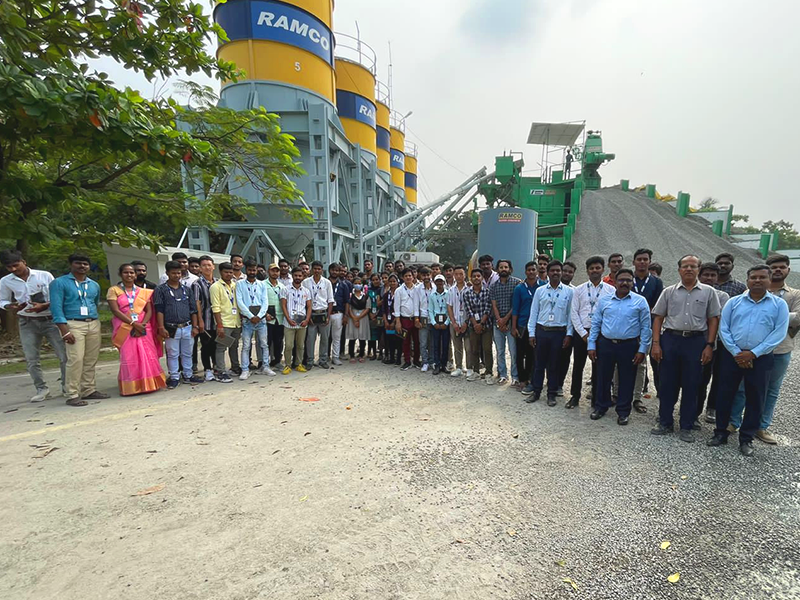
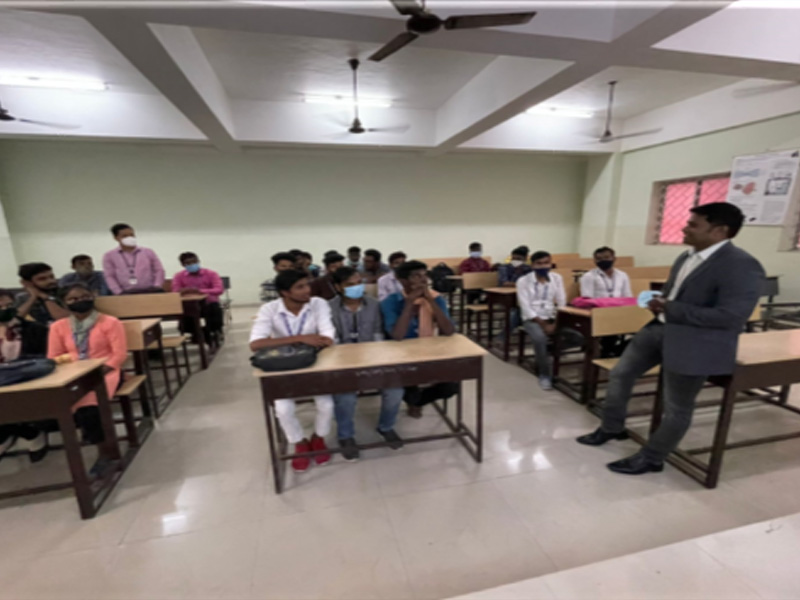
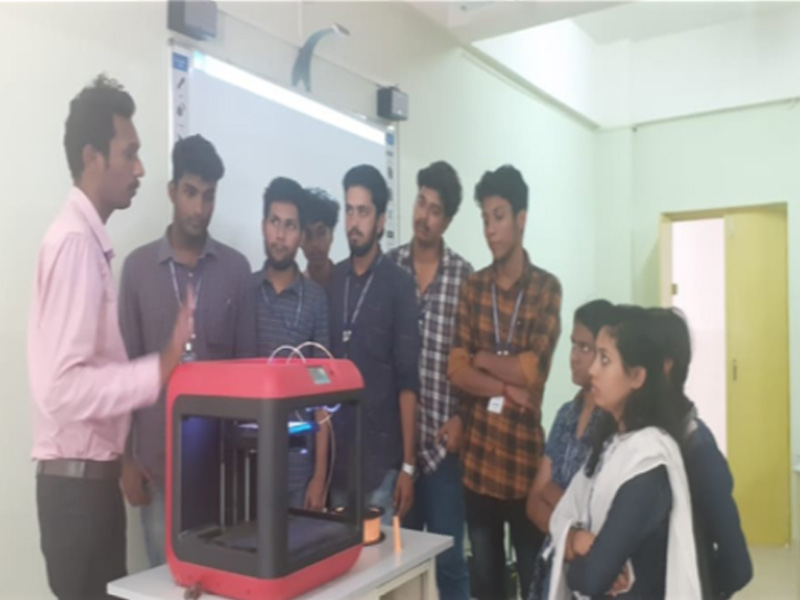
Established in 2008, the Department of Civil Engineering has become a hub of excellence with faculty holding qualifications from prestigious institutions. Committed to advancing knowledge, our faculty has secured nearly 21 + patents, showcasing a dedication to impactful research. We emphasize Planning, Design, Construction, and Management, fostering student enthusiasm in co-curricular activities. Our well-equipped labs, including CAD, Centre for Concrete Research, and Environmental Engineering Lab, facilitate experiential learning. Engaged in conferences, workshops, and consultancy projects, we take pride in producing adept engineers contributing significantly to global civil projects. Strong industry connections with RAMCO, CAD, and Bentley Systems further enrich our academic landscape.
Dr. R. Divahar
Professor and Head
Committed to achieving outstanding standards in education, we aspire to transform our department into a recognized center of excellence. Our dedicated faculty and well-defined mission aim to create global-standard technical manpower, contributing to regional, state, and national development. We actively foster student engagement in extra-curricular activities for holistic growth, preparing them for academic and real-world success.
• To achieve excellent standards of quality education by keeping pace with rapidly changing technologies.
• To create technical manpower of global standards and to make significant contributions to the economic and social development of the region, state and nation with capabilities of accepting new challenges.
• To create competent professionals who are trained in the design and development of Civil Engineering systems and contribute towards research & development activities.
• To possess and create knowledge capital to create Job creators not job seekers.
• To provide knowledge base and consultancy services to the community in all areas of civil Engineering.
• To make the Department a Centre of excellence in the field of civil engineering and allied research.
Programmes Offered
| P.No. | Outcome | Level of Outcome | Description |
|---|---|---|---|
| PO 1 | Engineering knowledge | Apply | Apply the knowledge of mathematics, science, engineering fundamentals, and an engineering specialization to the solution of complex engineering problems. |
| PO 2 | Problem analysis | Apply | Identify, formulate, review research literature, and analyze complex engineering problems reaching substantiated conclusions using first principles of mathematics, natural sciences, and engineering sciences. |
| PO 3 | Design/development of solutions | Apply | Design solutions for complex engineering problems and design system components or processes that meet the specified needs with appropriate consideration for the public health and safety, and the cultural, societal, and environmental considerations |
| PO 4 | Conduct investigations of complex problems | Apply | Use research-based knowledge and research methods including design of experiments, analysis and interpretation of data, and synthesis of the information to provide valid conclusions. |
| PO 5 | Modern tool usage | Create | Create,select,and apply appropriate techniques, resources, and modern engineering and IT tools including prediction and modeling to complex engineering activities with an understanding of the limitations. |
| PO 6 | The engineer and society | Evaluate | Apply reasoning informed by the contextual knowledge to assess societal, health, safety, legal and cultural issues and the consequent responsibilities relevant to the professional engineering practice. |
| PO 7 | Environment and sustainability | Analyze | Understand the impact of the professional engineering solutions in societal and environmental contexts, and demonstrate the knowledge of, and need for sustainable development. |
| PO 8 | Ethics | Evaluate | Apply ethical principles and commit to professional ethics and responsibilities and norms of the engineering practice. |
| PO 9 | Individual and team work | Analyze | Function effectively as an individual, and as a member or leader in diverse teams, and in multidisciplinary settings. |
| PO 10 | Communication | Evaluate | Communicate effectively on complex engineering activities with the engineering community and with society at large, such as, being able to comprehend and write effective reports and design documentation, make effective presentations, and give and receive clear instructions. |
| PO 11 | Project management and Finance | Create | Demonstrate knowledge and understanding of the engineering and management principles and apply these to one‟s own work, as a member and leader in a team, to |
| PO 12 | Life-long learning | Create | Recognize the need for, and have the preparation and ability to engage in independent and life-long learning in the broadest context of technological change. |
PSO1: To work independently as well as in team to formulate, design, execute solutions for engineering problems and also analyze, synthesize technical data for application to product, process, system design & development.
PSO2: To understand & contribute towards social, environmental issues, following professional ethics and codes of conduct and embrace lifelong learning for continuous improvement.
PSO3: To develop expertise towards use of modern engineering tools, careers in industries and research and demonstrate entrepreneurial skill.
PSO2: To understand & contribute towards social, environmental issues, following professional ethics and codes of conduct and embrace lifelong learning for continuous improvement.
PSO3: To develop expertise towards use of modern engineering tools, careers in industries and research and demonstrate entrepreneurial skill.
PEO1: Graduates will perform as professional engineers in the various fields of Civil engineering.
PEO2: Graduates will perform well in their specialized field and trained in teamwork and leadership positions.
PEO3: Graduates will pursue lifelong learning in their specialized fields of Civil Engineering.
PEO4: Graduates will exhibit entrepreneurship qualities.
PEO5: Graduates will contribute to the development of the profession, Nation, and society.
PEO2: Graduates will perform well in their specialized field and trained in teamwork and leadership positions.
PEO3: Graduates will pursue lifelong learning in their specialized fields of Civil Engineering.
PEO4: Graduates will exhibit entrepreneurship qualities.
PEO5: Graduates will contribute to the development of the profession, Nation, and society.
| S.No | Name & Designation | Particulars |
|---|---|---|
| 1 | “Dr.S.P.Sangeetha,
Professor Department of Civil Engineering, Aarupadai Veedu Institute of Technology, Chennai.” |
Chair Person |
| 2 | “Mr.C.Kathirvel,
Associate Professor, Department of Civil Engineering, Vinayaka Missions Kirupananda Variyar Engineering College, Salem.” |
Internal Expert |
| 3 | “Dr.R.Divahar,
Associate Professor, Department of Civil Engineering, Aarupadai Veedu Institute of Technology, Chennai.” |
Internal Expert |
| 4 | “Mr.M.Senthilkumar,
Assistant Professor, Department of Civil Engineering, Vinayaka Missions Kirupananda Variyar Engineering College, Salem.” |
Internal Expert |
| 5 | “Mr.K.Harish,
Assistant Professor, Department of Civil Engineering, Vinayaka Missions Kirupananda Variyar Engineering College, Salem.” |
Internal Expert |
| 6 | “Mr.K.Naveen Kumar,
Assistant Professor, Department of Civil Engineering, Aarupadai Veedu Institute of Technology, Chennai.” |
Internal Expert |
| 7 | “Dr. D.Shoba Rajkumar,
Professor & Head, Department of Civil Engineering, Government College of Engineering, Salem.” |
External Expert |
| 8 | “Mr.V.Angappan,
Civil Engineer & Valuer, Secretary Association of Licensed Building Surveyors, Aarupadai Veedu Institute of Technology, Salem.” |
External Expert |